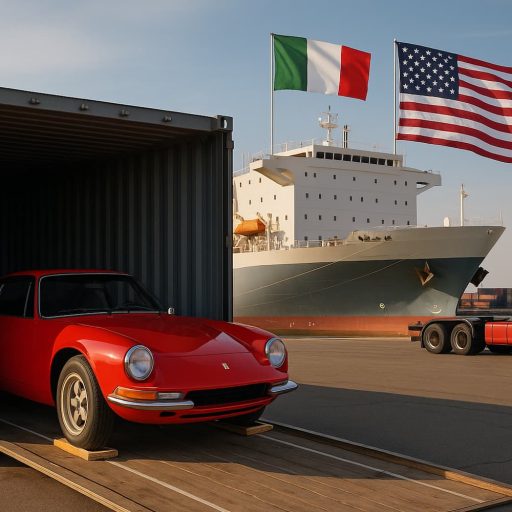

Auto vehicle shipping from Italy to North America involves detailed processes, compliance checks, and a series of well-timed steps. Whether the destination is the United States or Canada, the shipping journey begins with selecting the right transport method and understanding country-specific import regulations.
Why Ship a Car from Italy?
Italian vehicles are known for their craftsmanship, performance, and styling. For collectors, enthusiasts, and even everyday drivers, importing from Italy opens access to models not sold in North America. These include limited production classics, rare trims, and newer releases with region-specific features.
In some cases, costs may be lower even after shipping fees, duties, and compliance adjustments. The Italian market offers competitive pricing on used and vintage vehicles. This has made Italy a popular starting point for auto vehicle shipping.
Initial Preparation Before Shipping
Before contacting a transport provider, gather the following:
- Title and proof of ownership
- Purchase invoice
- Vehicle history or service record
- Export declaration (Italy)
- Compliance readiness for U.S. DOT or Canadian CMVSS
The absence of these documents can delay release at the destination port. Make sure all paperwork is translated into English or French, depending on the destination.
Choosing the Right Shipping Method
Roll-On/Roll-Off (RoRo)
RoRo is ideal for drivable vehicles. Cars are driven onto the ship and secured below deck. This method is typically faster and less expensive.
Container Shipping
This is preferred for high-value or delicate vehicles. Cars are loaded into 20ft or 40ft containers, which offer protection from saltwater and debris. Containers also allow for extra parts or accessories to be shipped in the same load.
RoRo is more common for standard shipments. Container transport, however, gives more privacy and safety.
Port Options in Italy
The most frequently used ports for auto vehicle shipping from Italy are:
- Port of Genoa
- Port of Livorno
- Port of Naples
- Port of Salerno
Each offers different schedules, loading capabilities, and carrier options. Departure port selection may depend on the car’s location in Italy or available service to the target country.
US Entry Requirements
Safety and Emissions Compliance
The U.S. enforces Federal Motor Vehicle Safety Standards (FMVSS) and Environmental Protection Agency (EPA) regulations. Imported vehicles must comply unless they are:
- 25 years or older (exempt from FMVSS)
- Intended for show or exhibition
- Imported under a Registered Importer (RI) program
Any non-compliant vehicle must be modified before being released. This can involve retrofitting bumpers, lights, or emission systems.
US Customs Process
At the entry port, the following are inspected:
- Bill of lading
- EPA form 3520-1
- DOT form HS-7
- Original title
- Entry summary (CBP Form 7501)
Customs may apply duties based on vehicle type and origin. For Italian-built cars, a standard passenger vehicle duty rate is 2.5%.
Canada Entry Requirements
RIV Program and CMVSS
Canada uses the Registrar of Imported Vehicles (RIV) program. Most vehicles under 15 years old must go through this process. The car must comply with Canadian Motor Vehicle Safety Standards (CMVSS).
Upon arrival:
- RIV fee is paid
- Vehicle is inspected
- Modifications are made if needed
- Certification label is applied
Taxes and Import Charges
Duties and taxes depend on the province of entry. Expect to pay:
- Federal Goods and Services Tax (GST)
- Provincial Sales Tax (PST) or Harmonized Sales Tax (HST)
- Excise tax (if engine size exceeds 2.7L)
- Air conditioning excise tax
You may also need to cover brokerage, handling, and inspection fees.
Transit Time and Scheduling
Auto vehicle shipping from Italy to the US or Canada takes between 3 to 6 weeks, depending on the route and method. RoRo is often faster than container shipping.
Port congestion, weather, and customs inspections can extend the timeframe. Booking at least one month in advance is recommended.
Insurance for Peace of Mind
Transit insurance is not included in standard freight rates. It should be arranged separately.
There are two main types:
- Total loss (covers full value if ship sinks or total damage occurs)
- All-risk (covers partial damage, theft, vandalism, or loss)
Premiums depend on declared value, shipping method, and provider terms. Without insurance, owners bear the full risk during transit.
Importing Electric Vehicles (EVs)
Electric models have their own procedures. Battery handling requires safety clearance. Canadian customs require proof of battery specifications and capacity for duty classification.
Some EVs may be eligible for tax incentives upon arrival. This varies by province or state and is subject to local environmental regulations.
Customs Brokers and Import Agents
Hiring an experienced customs broker can simplify the process. Brokers coordinate with shipping lines, ensure paperwork is correct, and communicate with border authorities.
An import agent in Italy can also assist with export permits and port handling. Their support may reduce time at both ends of the journey.
Costs Associated with Auto Vehicle Shipping
Here is a typical cost breakdown:
| Item | Approximate Range (USD) |
|---|---|
| RoRo Shipping Fee | $1,200 to $1,800 |
| Container Shipping Fee | $2,000 to $3,500 |
| Inland Transport (Italy) | $200 to $800 |
| Port Handling Fees | $100 to $350 |
| Customs Duties | 2.5% (US), GST/PST (Canada) |
| RIV Fee (Canada) | $325 plus tax |
| Insurance (optional) | 1.5% to 2.5% of vehicle value |
These are estimates. Final pricing depends on location, season, and current port demand.
What Happens Upon Arrival
Once the ship docks, vehicles are unloaded and held in bonded storage. Customs clearance is processed at this point.
RoRo vehicles are typically released sooner. Container shipments take longer due to unloading and inspection.
The importer or their broker will receive notice once the vehicle is cleared. From there, local transport or personal pickup can be arranged.
Recommended Ports of Entry in North America
For the United States
- Port of New York/New Jersey
- Port of Baltimore
- Port of Miami
- Port of Houston
- Port of Los Angeles
Each has experience handling Italian shipments and offers customs inspection on-site.
For Canada
- Port of Halifax
- Port of Montreal
- Port of Vancouver
Halifax is common for Eastern Canada. Vancouver serves the West Coast. Montreal is central for Ontario and Quebec-bound deliveries.
Compliance Modifications
Vehicles that don’t meet North American standards must be brought into compliance.
Modifications may include:
- Changing speedometers from km/h to mph (for U.S.)
- Installing daytime running lights (Canada)
- Adjusting bumper height
- Converting headlights
Keep documentation of any modifications. These may be required for future registration or resale.
Registering the Vehicle
After customs clearance, the car must be registered in its destination province or state. Required documents include:
- Customs release
- Proof of ownership
- Compliance record
- Local inspection or emissions test results
Each region has its own licensing rules. It’s best to check with local transportation offices in advance.
Common Mistakes to Avoid
- Incomplete paperwork
- Shipping a non-compliant vehicle without a plan
- Choosing the wrong shipping method for high-value cars
- Missing deadlines for customs declarations
- Underinsuring the shipment
Mistakes can lead to fines, delays, or denial of entry. Preparation prevents costly complications.
Conclusion
Auto vehicle shipping from Italy to North America requires coordination and accuracy. From the right transport option to the final registration step, each phase has specific guidelines and expectations.
Whether you’re shipping a collectible Alfa Romeo or a daily-use Fiat, working with reliable professionals makes the journey smoother.
 Global Import
Leave a comment